
You publish content. You optimize pages. You invest time in keyword research. Traffic trickles in—sometimes even pours in—but conversions? They barely move the needle. It feels like shouting into a crowded room where everyone hears you, but no one responds.
That’s the silent struggle most marketers face. The problem isn’t visibility. It’s misalignment. You might be targeting keywords, but not the right ones—the ones your audience actually uses when they’re ready to act.
Here’s where things start to click. To truly find which keywords your target audience uses, you need to go deeper than surface-level metrics. You need to understand intent, context, and behavior. That’s exactly where SERP signal analysis steps in, acting like a compass in a foggy landscape.
Let’s break it down in a way that feels less like a textbook and more like a real conversation—because that’s how your audience searches, too.
Why Traditional Keyword Research Often Misses the Mark
Let’s call it what it is—traditional keyword research can sometimes feel like chasing shadows. You look at search volume, competition, and maybe a keyword difficulty score, and then you make your move.
But here’s the catch: high traffic doesn’t always mean high intent.
You might search for words or phrases related to your products or services and find keywords that look promising on paper. But when you actually target them, they attract people who are just browsing, not buying.
It’s like setting up a shop in a busy street where everyone is window shopping, but no one is ready to pull out their wallet.
What’s missing? Context.
And that’s exactly what SERP signal analysis brings to the table.
SERP Signal Analysis: Reading Between the Lines
Think of the search results page as a live reflection of user intent. It’s not random. Every result is there for a reason.
When you type in a query, search engines respond with what they believe users want to see. That’s your biggest clue.
So instead of guessing, you observe.
Ask yourself:
- Are the top results product pages or blog posts?
- Do you see comparisons, reviews, or guides?
- Are there shopping listings or informational snippets?
These are signals—strong, clear, and incredibly useful.
If product pages dominate, the keyword likely has strong buying intent. If guides and tutorials lead the pack, users are still exploring.
In simple terms, SERP analysis helps you stop guessing and start reading the room.
How to Find Which Keywords Your Target Audience Uses
Now let’s get practical.
To find which keywords your target audience uses, you need to think like them—not like a marketer, but like a problem-solver.
Start by stepping into their shoes:
- What are they struggling with?
- What questions are keeping them up at night?
- What solutions are they actively searching for?
Then, search for words or phrases related to your products or services exactly the way they would.
Not polished. Not perfect. Just real.
This is where a data-driven keyword research tool becomes your best ally. It helps you uncover:
- Variations of search queries
- Related terms you might not have considered
- Hidden intent behind certain phrases
But remember, tools give you data—you give it meaning.
All Depends on Search Intent
If keyword research is the engine, search intent is the fuel.
Without understanding intent, even the best keywords can fall flat.
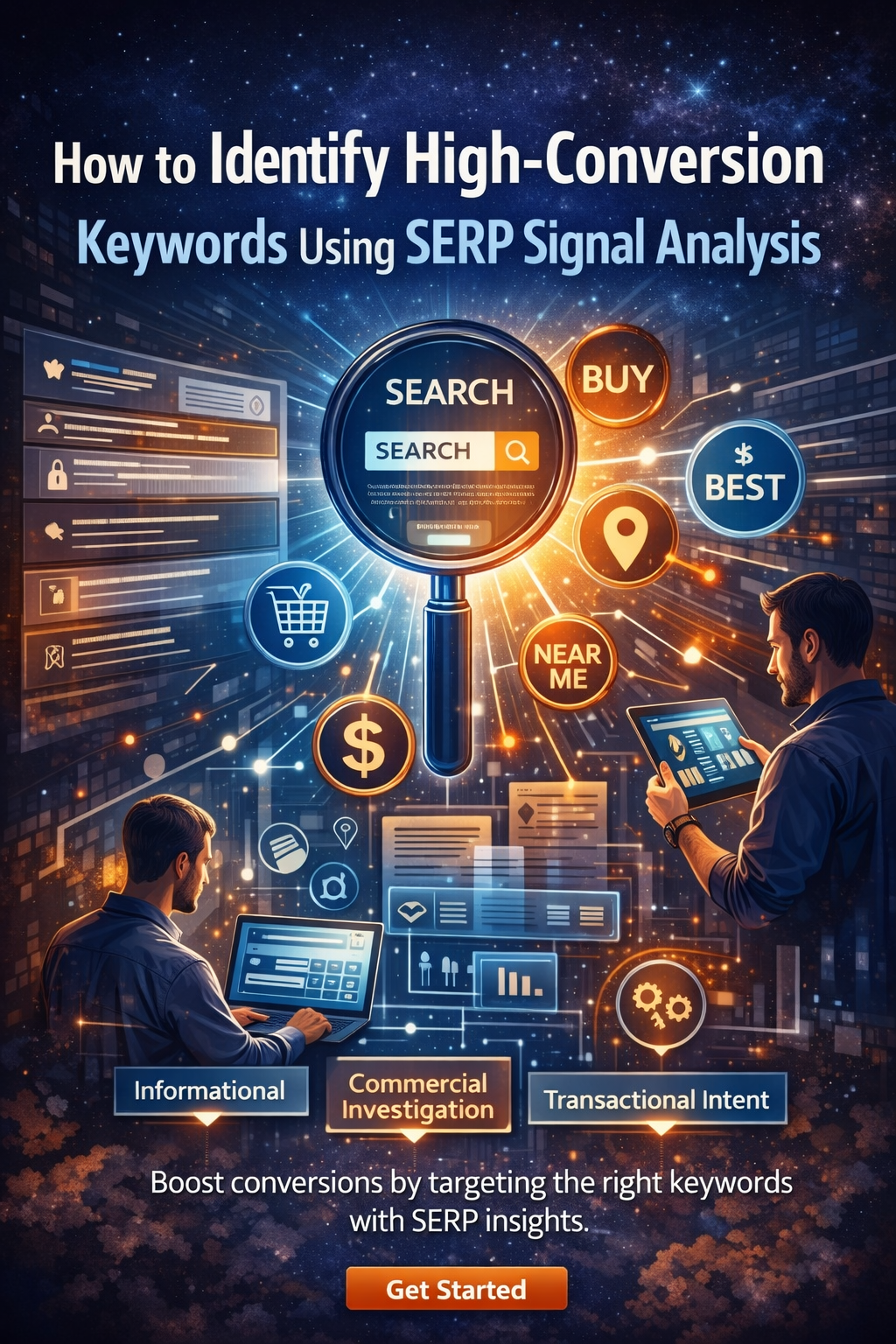
SERP signal analysis helps you decode intent naturally. You’ll start to notice patterns:
- Some keywords attract learners
- Some attract researchers
- Some attract buyers
And here’s the golden rule:
High-conversion keywords usually come from people who are closer to making a decision.
These users are not just curious—they’re committed.
They search with purpose. And your job is to meet that purpose head-on.
SERP Features: The Hidden Clues You Can’t Ignore
Modern search results are packed with features that whisper insights—if you’re paying attention.
Look out for:
- Featured snippets answering direct questions
- “People Also Ask” sections reveal deeper concerns
- Product listings signaling buying intent
- Local results point to immediate action
Each feature is like a breadcrumb on a trail.
Follow them, and you’ll uncover what your audience truly wants.
For example, if a keyword triggers product listings, it’s a strong hint that users are ready to buy—not just browse.
That’s not just traffic—that’s opportunity knocking.
Aligning Content with Intent: Where Conversions Happen
Here’s where many get it wrong.
They find a keyword, create content, and hope for the best.
But hope is not a strategy.
Once you identify high-intent keywords, your content must align perfectly with what users expect.
If the SERP shows comparison articles, create a comparison.
If it shows product pages, build a compelling product experience.
It’s about matching expectations, not reinventing the wheel.
Think of it like this:
If someone walks into a café asking for coffee, you don’t hand them a menu about tea history.
Give them exactly what they came for—only better.
Using Competitor Insights Without Copying
Your competitors are already leaving clues behind.
Look at what they’re ranking for. Study their content. Understand their approach.
But don’t just follow—improve.
A data-driven keyword research tool can help you identify gaps:
- Topics they’ve missed
- Questions they haven’t answered
- Opportunities they’ve overlooked
This is your chance to stand out, not blend in.
Because in the end, it’s not about doing more—it’s about doing it smarter.
Long-Tail Keywords: Small Phrases, Big Impact
Here’s a little secret—sometimes the gold is hidden in plain sight.
Long-tail keywords may not bring massive traffic, but they bring the right traffic.
These are specific, detailed queries that reflect clear intent.
When you find which keywords your target audience uses, you’ll notice that many of them are not short and generic—they’re detailed and purposeful.
These users know what they want. And when you meet that need, conversions follow naturally.
It’s like having a direct conversation instead of shouting into a crowd.
Behavioral Signals: What Happens After the Click
Getting clicks is one thing. Keeping attention is another.
Once users land on your page, their behavior tells you everything:
- Do they stay and read?
- Do they explore further?
- Do they take action?
If they leave quickly, something’s off.
Maybe the keyword didn’t match the content.
Maybe the intent was misunderstood.
But when everything aligns, you’ll see it—engagement rises, conversions follow, and your strategy starts to pay off.
That’s when you know you’ve struck the right chord.
Building a Strategy That Stands the Test of Time
Keyword trends shift. Search behavior evolves. What works today might not work tomorrow.
That’s why your approach should be flexible, not fixed.
Keep revisiting your keyword research.
Keep analyzing SERP changes.
Keep refining your content.
A data-driven keyword research tool helps you stay grounded in reality, not assumptions.
Because in the fast-moving world of search, staying still is the fastest way to fall behind.
Conclusion
At the end of the day, this isn’t just about keywords—it’s about connection.
When you find which keywords your target audience uses, you’re not just optimizing content. You’re understanding people. You’re stepping into their world and offering exactly what they need, right when they need it.
SERP signal analysis gives you that edge. It helps you see beyond numbers and into intent. It turns guesswork into clarity and effort into results.
So instead of chasing traffic for the sake of it, focus on attracting the right audience—the ones ready to engage, trust, and convert.
Because when you align your strategy with real intent, everything else falls into place.
Now let me ask you—are you still chasing keywords, or are you ready to start understanding the people behind them?

Leave a Reply