
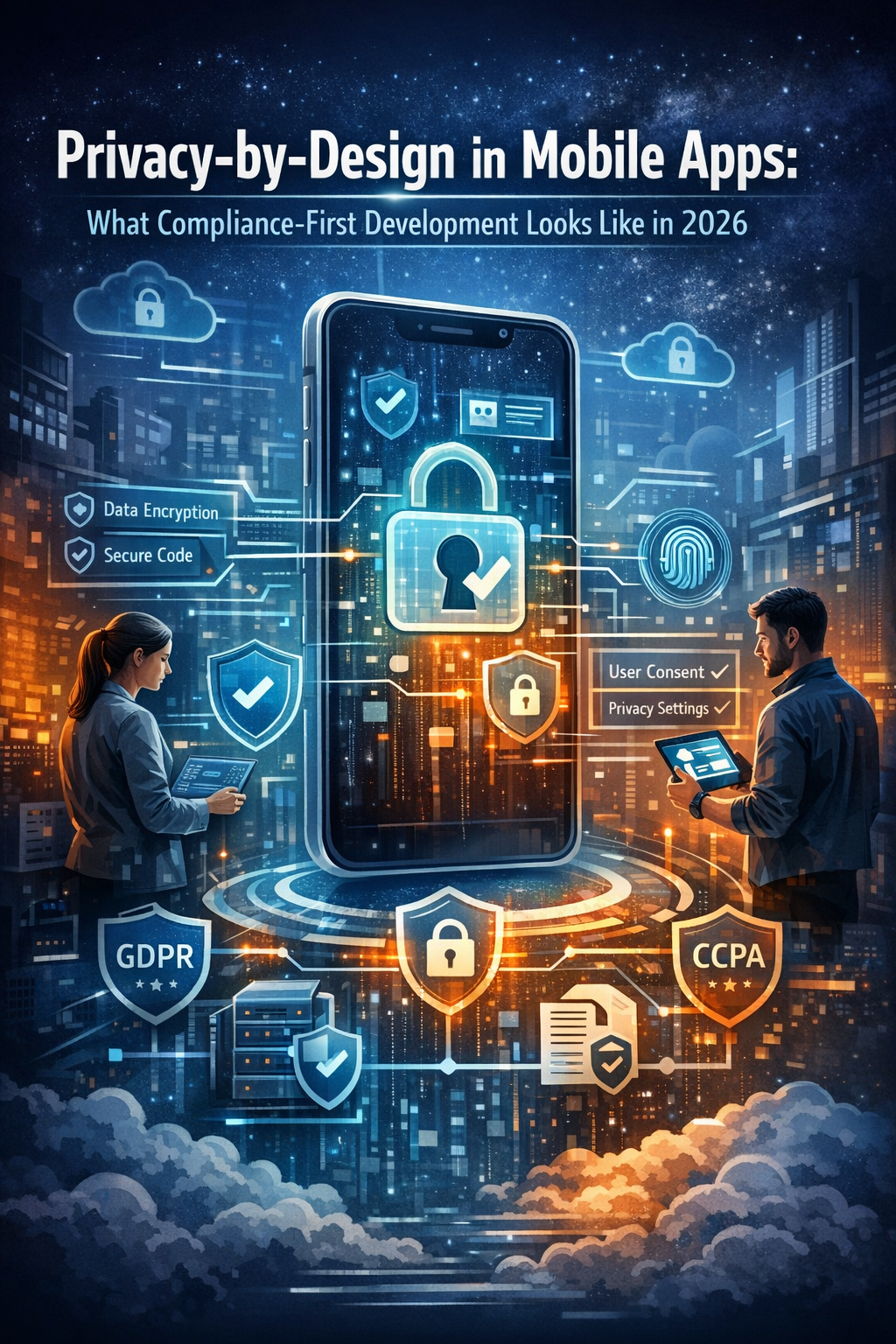
Data has become one of the most valuable assets for modern businesses, and in turn one of the most attractive targeted for cyber criminals. The rise of global regulations and cyber threats makes businesses think of having privacy and security in mobile app development. Why? Because of the growth of mobile apps, also raised the concerns over data security and privacy. As users, we need apps that respect our privacy; this helps in building trust, which also makes it a competitive advantage.
A compliance-first approach is required in mobile app development for transparency, data minimization, and secure data handling at every stage. On the flip side, for businesses, this helps to cut down legal risks while improving brand credibility. All the above, the motive is to make apps not only functional, or engaging, but also safe for the users. Let’s start with this blog and learn more about how privacy-first thinking and compliance-driven development reshape modern mobile applications in 2026. Keep reading.
What is Privacy-by-Design in Mobile Apps?
In mobile apps, privacy by design means thinking about data protection before a single line of code is written. It shifts privacy from a reactive compliance task to a design decision that shapes how products, systems, and business processes. Traditionally, many apps followed a “build first, secure later” model, which is often responsible for data leaks and compliance issues. As a part of the solution, privacy by design flips the situation by embedding privacy into every layer of the app.
Here is how it is guided by the simple seven principles:
- Being proactive, and not reactive, it prevent issues before they happen.
- Having privacy as the default, users are automatically protected.
- Privacy is embedded into the design, built into the app architecture.
- It is fully functional, which means no trade-off between usability and privacy.
- User will have end-to-end security, which means data is protected at all stages.
- It gives transparency to users about how their data is used.
- It has a user-centric approach, which means users stay in control.
Understanding Regulatory Compliance for Mobile App Development
More than technological tools, mobile apps are an extension of each mobile phone user and an indispensable convenience for most consumers. In this case, regulatory compliance is needed so that businesses collect, store, and process personal information responsibly. Additionally, failing to meet these standards will result in heavy fines and loss of customer trust.
Here are the global regulations. Take a look:
GDPR: It focuses on user consent and data protection.
CCPA: It give user contol over their personal data.
DPDP Act: This regulates how personal data is handled in India.
Here are the key compliance requirements:
Data Minimization: It collects only what is necessary.
User Consent: It ask about permission before collecting data.
Secure Storage and Processing: This will protect user data at all times.
Right to access and delete data: This allow user to control their information.
Core Pillars of Privacy and Security in Mobile App Development
Data Minimization
This only collects data that is required for your app to function, and avoids asking for unnecessary permissions. This lowers the risk and builds customer trust.
Strong Encryption
Every app user wishes that their data is protected, and this is where encryption comes to role. It helps in both when data is transmitted and stored.
Secure Authentication
Multi-factor authentication(MFA) and biometric verification are strong login systems that work to prevent unauthorized access.
Transparent Data Practices
For transparent data practices, it’s better to provide simple privacy policies and easy consent forms. This helps users to make informed decisions.
Regular Security Audits
Regular testing, monitoring, and updates are crucial to identify vulnerabilities early. This means your apps stay secure over time.
What is Compliance-First Development?
Compliance-first development means building mobile apps while keeping legal and regulatory requirements. It is required so that the application meets legal and security standards, protects user data, and operates ethically within the regulatory framework. All the above, to make your audience build trust in your business, and mitigate risks, integrating compliance measures is required.
Here’s how it helps businesses:
- Faster regulatory approvals.
- Reduced legal and financial risks.
- Stronger product credibility.
So, we hope to have now got the bird’s eye view on the importance of compliance-first development aligns with privacy-by-design in mobile apps. All this will create apps that are both secure and legally sound.
How to Implement Privacy-by-Design in Mobile Apps
- Identify data requirements by collecting relevant information. Avoid extra information that does not serve a clear purpose.
- Understand map data flow within your app, from collecting to storage and processing.
- Build privacy into UI/UX, design clear permission requests, and user-friendly consent options. This make easy for users to undertand that they’re agreeing to.
- During the app development phase, early integration of encryption, secure authentication, and protected APIs works well.
- Before releasing the app, give a check to identify potential threats by conducting risk assessments.
- Make sure your app aligns with relevant regulations like GDPR or DPDP.
- regularly monitor for glitches to fix security gaps, and stay aligned with evolving regulations and threats.
Benefits of Privacy-by-Design for Businesses
The world is driven by data, which is why protecting the confidentiality and integrity of information becomes necessary for trust and customer loyalty. This is where the concept of privacy by design makes sense. Here is how it helps businesses:
Builds trust and improves customer retention. As it shows that you value data protection.
Improves brand reputation and business image as responsible and secure for customers.
Lowers the risk of fines and compliance-related issues. Make customers’ experience better by improving app performance, due to less collection of data.
Conclusion
Privacy-by-Design and compliance-first development are no longer different things; they are the foundation of modern mobile apps in 2026. As a business, when you give importance to user privacy from the start, you are building trust and long-term value with your customers. So, here we come to the end of this blog. We hope you’ve enjoyed reading this blog on Regulatory compliance for mobile app development. Here comes the question for you: Is your app truly protecting your users, or just meeting the bare minimum? Answer your comment below. Till then, keep exploring, and keep growing. We’ll meet with another interesting topic.

Leave a Reply